The Films of Andrew Lau
Andrew Lau Wai-keung, born in Hong Kong on the 4 th of April 1960, can be described as a child of Hong Kong’s 1 st New Wave, working alongside the likes of Tsui Hark, Wong Kar Wai and Ronny Yu before striking out on his own as a bona-fide cinematographer and film director. He is a talented director, cinematographer and producer, juggling all 3 acts at the same time.
Andrew Lau is a genuine child of Hong Kong cinema. He only graduated from high school in 1981 before working for Shaw Brothers as a production assistant. He was an avid photographer and wanted to be part of the camera crew, to which he eventually joined and worked his way up from a lens changer to a focus puller. (Wood, 1998, p. 59)
He moved onto New Cinema City as he felt Shaw was behind times and believed New Cinema City to be the new direction to go for Hong Kong cinema. He eventually caught a lucky break and became a camera operator for the film Mr. Vampire (1985) after the initial camera operator left for another film. His enthusiasm and eagerness to learn allowed him to progress far in the industry, learning from the veterans like Ricky Lau Koon Wai. (Wood, 1998, p. 60)
Andrew Lau eventually became a cinematographer, his early credits including the other Mr Vampire sequels and Ringo Lam’s City On Fire (1987). His search for a new visual style in Hong Kong cinema gave birth to the unique visual flair in Wong Kar Wai’s As Tears Go By (1988). Wong Kar Wai, the more famous of Hong Kong’s 2 nd New Wave directors, had little knowledge about cameras and technical 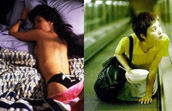 aspects of film-making, and Andrew Lau took that chance to both try something new with his own visual voice and tell the story and emotions through the visual elements as well. He too collaborated with Wong Kar Wai for several of his latter projects, including Days Of Being Wild (1990) and Chungking Express (1994) with Christopher Doyle.
Like Terrence Malick and Zhang Yimou, Andrew Lau eventually took his cinematographer’s knowledge with him and began a new career as a film director. His directorial debut, Against All (1989), was a gangster film about love and revenge, themes that would ring in many of his later films. He was unhappy with the cinematography, and thus began his trademark of photographing his films himself. “...i took the camera myself because I know, but I can’t describe what I want. It’s also faster; no need to talk!” (Wood, 1998, p. 68)
He returned to the subject that marked his debut as a cinematographer with his own Ultimate Vampire (1991), which also reprises several of the cast members from the Mr Vampire series in similar roles. This recycling of actors is commonplace in Hong Kong cinema, where an actor can become very easily typecast into a popular role that he or she made famous. One prime example is the vampire exorcist character played by Lam Ching-Ying, who was typecast into the master exorcist/mentor figure role for much of his career.
Andrew Lau soon came into his own with the subject matter that will become his most popular: Triads. Hong Kong Triads were notorious for their size, their power and the level of infiltration these triads have managed to get into various Hong Kong industries, including the film industry. Actors, producers and directors have been forced into situations where they have to make films, and in the process, money, for these triads. Films in Hong Kong require low financial input but yield high commercial output, and the ever-opportunistic Triads began to take this chance to make a low risk/ high returns quick buck. [(Stokes & Hoover, 2001, p. 31-33), (Dannen & Long, 1997, p.8-9,p. 24-37)]
On the streets, the triads were seen as the governing body, feared by the people and untouched by the law. Many Hong Kong youths consider joining a secret society to be an initiation rite into manhood. Senior triad members would either fall into the ‘honor and respect’ category of old, fighting for their rights and rebelling for the proper causes, or the ‘make as much money as possible’ category, corrupting the governing and youth systems in Hong Kong. Money talks in Capitalist Hong Kong. Hong Kong audiences have a attraction towards the exciting life of triads, and triad members themselves like to see their portrayal onscreen, thus the market for Triad films was commercially ripe for the picking.
Andrew Lau’s fascination with gangsters may have been stemmed from the popular gangster culture borne during Hong Kong cinema’s 1 st new wave, but his personal style and edgier, grittier look at the streets of Hong Kong paved the way for a whole new generation of gangster films called Triad Boyz films. (Stokes & Hoover, 2001, p. 79)
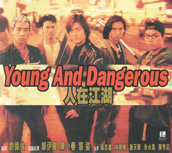 His earlier attempts at crafting a new look at gangster films, To Live And Die In Tsimshatsui (1994) and Mean Street Story (1995), were seen as precursors to his phenomenal Young And Dangerous series. (Wood, 1998, p. 61) The previous 2 films had similar themes, telling the story of the everyman trapped in a world ruled by the power struggle between Triads and the police force. He experimented with visuals, speeding up the pace of the camerawork and contrasted the colourful neon lights of Hong Kong with the dark ominous world of the man himself.
He eventually set up his own production company with 2 other filmmakers, Wong Jing and Manfred Wong, called Best Of The Best (BOB). They eventually produced Young And Dangerous, the ultimate Triad Boyz movie that began the movement. It was shot on a low budget, thus giving the film a down-to-earth realistic look, yet with Andrew Lau’s cinematography experience, the film was sleek and fast for the young audience that the film was targeted at.
The storylines and characters for the films are adapted from a series of Hong Kong comics called Teddy Boys. The first few films of the series had shots from the comic books themselves inter-cutting with the live-action sequences. Ekin Cheng, one of Andrew Lau’s oft-used actors, plays a youth who initially joins the triads for protection from an older triad member. His rise to fame and glory is often marked with trials and tribulations, outlining both the glorious and gritty side of Triads. In a triad, a man may make friends, true brother who will sacrifice for you and stick with you through thick and thin, but will also have people who will do anything to rise to power, fame and riches in the gang. This theme of love (brotherly, paternal, sexual), righteousness, revenge and betrayal is recurrent throughout the series’ 11 instalments (6 in the main storyline,1 prequel, 4 spin-offs).
Young And Dangerous (1996) kick-started many actor’s careers and gave a new interpretation to the gangster character in Hong Kong films. Gone are the long black trench coat and the burning $100 bill of Chow Yun Fat’s A Better Tomorrow, and in come the sleek tight Versace jackets and the slow flicking and tapping of a cigarette lighter of Ekin Cheng’s Young And Dangerous. In a classic example of life imitating art imitating life, youths began talking, walking and dressing like the characters in the films, which were portraying these youths on film. These triad boys are reckless, carefree and having fun along the way. They search for justice and righteousness in their own manner. They lack parental love and guidance and see the triads as their surrogate family. They are individuals without self-identity. They are the personification of Hong Kong, trapped between post-colonialism and their imminent return to a motherland long forgotten: China. There was uncertainty, unpredictability and unease in Hong Kong’s society pre-reunification.
The Young And Dangerous series contain many social commentary. Young And Dangerous highlights Hong Kong society’s lack of a parental figure and the effects of police corruption and negligence. The politics of Taiwan and the similarities between Taiwan and Hong Kong society is showcased in Young And Dangerous2 (1996). Hong Kong’s constant need to update and modernise cultures and traditions is underscored in Young And Dangerous3 (1996). In ’97 Young And Dangerous (1997), the common people’s view on Hong Kong’s reunification with China and its various effects on the sociological and financial cycle on Hong Kong is voiced out.
The series has been blamed for glorifying the life of triads, presenting an inaccurate representation of the triad life. Andrew Lau stands by the fact that he is making a film for entertainment purposes and the film will not work if he does not re-interpret triad life for films. He also gives his opinion on triads through the films by having very clear distinction between the good and the bad guys. (Wood, 1998, p. 64-65) The good guys in the films are generally good people placed in triad circumstances, rising above the grime of triads to become better human beings. Chan Ho Nam, the protagonist of the main series storylines, is a loyal, trustworthy, righteous man who stands for his rights and does not compromise for the sake of money or fame. He is the black knight of Hong Kong, riding the streets with his comrades-in-arms and righting wrongs in his own unique manner. In latter parts of the series, he experiences loss and soon wishes for a quiet, peaceful life. He yearns to love, yet fears because of his lifestyle. He is a reluctant triad member, discouraging others from making the same mistakes.
The Young And Dangerous films showcase Andrew Lau’s constant desire to bring freshness and new updates to a stagnant film industry. The title Young And Dangerous signals the arrival of a new generation of youngsters, born and bred in modern capitalist Hong Kong. Characters in the films echo his sentiments with the films’ younger characters standing up against older, outdated ones. The push for modernisation and improvements in Hong Kong society is evident in the films.
The Young And Dangerous franchise is also a very good example to outline the various problems with Hong Kong cinema. The film was shot low-budget and fast, and garnered incredible ticket sales and acclaim for its handling of subject matter and unique visual flair. It was an overnight success. The film is a classic example of low capital/ high revenue films that populate the Hong Kong scene. Audiences were hungry for more and producers were anxious to provide. In the span of a year, 3 Young And Dangerous films were released, and all 3 were in the top 10 highest grossing films of 1996. The storyline recycled, the actors re-used (Jason Chu’s character was killed in the first instalment only to return in the 2 nd film as a different character, Brother Bee of the first film returned in the 3 rd as a villain, the same actor was used as villain in both the 3 rd and the 4 th film). It generated a whole new genre of films, and became almost a small industry onto itself with its countless sequels, spin-offs, remakes and spoofs. The series soon fell into redundancy (Young And Dangerous reached ‘middle-age’ by the 4 th film) and loss its appeal. (Stokes & Hoover, 2001, p. 81-82) It is the same with every successful franchise in Hong Kong cinema. This led to a decline in ticket sales and piracy rose as audiences would rather not waste the time and money to watch in theatres when they know what the show is going to be about, and instead buy cheaper versions to enjoy whenever they feel like. (Stokes & Hoover, 2001, p. 293)
In the past, Hong Kong’s own film industry boomed and the top grosser of the years were always from Hong Kong, but this new trend in Hong Kong cinema led to a worrying crisis in the industry. Hollywood films like Jurassic Park: The Lost World and Titanic took over Hong Kong’s own films in ratings. (Stokes & Hoover, 2001, p. 293) Technological advances in filmmaking techniques wowed audiences the world over and this fascination would lead into Andrew Lau’s next film project.
The Storm Riders(1998), another comic book adaptation, was made with the purpose of driving Hong Kong’s film industry into a new, more technologically advanced, direction. The film was high budget (by Hong Kong standards – US$6.4 million) (Stokes & Hoover, 2001, p. 299) and took several years to make due to the computer generated graphics used. The fantasy martial arts genre was given a breath of fresh air with the comic-book style action sequences and exaggerated characters and the plot was simple and easy to follow, but overall the film was lauded for its incredible digital effects, unseen of in Hong Kong cinema back then. It starred 2 of Hong Kong biggest pop idols at that time, Ekin Cheng and Aaron Kwok, and became a commercial success, which eventually led to more digitally-driven films following in The Storm Riders vein. (“The Stormriders and the future of Hong Kong cinema: a polemic”, 2002, par 1, 14) More budget was given to such films, but less time was allowed for the films to develop a proper script, which resulted in digitally-impressive films with silly, paper-thin plotlines. Andrew Lau himself was responsible for several of these films, including A Man Called Hero(1999), another comic book adaptation and “The Duel” (2000), all starring Ekin Cheng.
The years following The Storm Riders Andrew Lau did not produce anything remarkable, mostly romantic comedies [Dance Of A Dream (2001)], action films [Legend Of Tekken (2001)] and the 6 thYoung And Dangerous (2000) instalment. He also has a brief foray into horror and the supernatural with the films The Wesley’s Mysterious Files (2002) and “The Park” (2003), both special effects-driven movies. These films, although not bad, were mildly received as compared to his previous works. Then came the biggest Hong Kong blockbuster that seemingly changed Hong Kong cinema yet again.
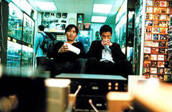 Infernal Affairs, starring 2 of Hong Kong’s biggest stars Andy Lau and Tony Leung Chiu Wai, was hyped beyond doubt for its star-studded cast, which also included veterans Anthony Wong and Eric Tsang. The plot was a convoluted and intensely deep story about the war between modern day triads and the police force. Andy Lau and Tony Leung play similar characters on opposite ends of the spectrum, one a triad member who is a mole in the police force, while the other is a police officer acting undercover as a mole in the triad gang. The film centres on the characters finding out who is the real mole, and eventually what is their real identity. After so many years undercover, are they still who they are before becoming a mole, or have they become the person they themselves loath to be? The title itself is mixed into the Buddhist culture, referring to the last level of hell, where one experiences perpetual suffering. These 2 characters are suffering deep inside, the triad mole wishing to distance from the triads and become an actual, proper policeman, while the other wanting to return to his old life as an upright police officer.
The film spawned a prequel (which explained several plot holes in the first film and added extra layers to a well-rounded storyline) and a sequel (which failed to add anything new to the mix beyond additional characters and the fate of Andy Lau’s character post-Infernal Affairs 1). The production value was high and the film was shot meticulously and beautifully, with sleek camerawork that ushered in the modern techniques of filmmaking in Hong Kong. The cinematography was a fine blending of Andrew Lau’s old visual style with the cool post-millennium Asian cinema flair, Hong Kong filmmaking at its finest.
It was a commercial film that appealed to the mass audience, and also a thinking man’s film with its incredible story structure and intricate plot design. It heralded a new look at the new Triads: smart black suits with bigger ambitions than just fighting over territories, branching into modern day technology and broadening their scope. The police force is also given equal and proper portrayal, with both upright, just police officers and corrupt moles in the mix. There was no clear distinction as to who the good and the bad guys are. There are reasons to both love and hate the characters in the film. Nobody is truly and completely good or evil.
Infernal Affairs garnered Andrew Lau’s first (and long-awaited) Hong Kong Film award, sharing the accolade with Alan Mak. Andy Lau and Tony Leung became the new “Chow Yun Fat” of the new millennium. Scriptwriters re-emerged as a new force to be reckoned with. The film is now currently in developments as a Hollywood remake The Departed, with an equally star-studded Hollywood cast of Jack Nicholson, Leonardo Dicaprio and Matt Damon, directed by Martin Scorsese himself. Infernal Affairs brought the new Hong Kong cinema to the attention of the international market.
Andrew Lau is now better known for his work on Infernal Affairs trilogy than anything else. His last few films were also shot in similar style to Infernal Affairs, including the popular Japanese comic book adaptation Initial D, which plucked young Taiwanese Artiste 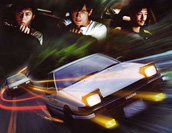 Jay Chou from the music industry and repackaged him for the film industry of Asia. Andrew Lau’s knack for grooming young talents (Ekin Cheng, Jordan Chan, Daniel Chan) has not diminished, allowing Jay Chou to garner a “Best Newcomer” award for his role in Initial D. His most recent work, Daisy, was a co-production with the Korean region, starring some of Korean’s hottest names, including Jeon Ji-Hyun of My Sassy Girl fame.
Hong Kong cinema’s resurgence in the 90s and re-emergence into the new millennium was a tough ride and few directors and filmmakers survived the crisis in between (re-unification, financial crisis, film industry decline). Andrew Lau, with his constant motivation to improve and renew himself, thrived despite little pitfalls littering his way. He has an eye for commercial success with films that also contain many layers beneath the surface. Now, he is one of Hong Kong cinema’s most recognisable names, perhaps even being the leader of Hong Kong cinema’s 3 rd New Wave of films.
Written by: Cai Yinghui Alan
References:
Dannen, F. & Long, B. (1997). Hong Kong Babylon. London: Faber And Faber Limited.
Wood, M. (1998). Cine East: Hong Kong Cinema Through The Looking Glass. England: FAB Press
Stokes, L. O. & Hoover, M. (2001). City On Fire: Hong Kong Cinema. UK/USA: Verso
“Andrew Lau Wai-Keung” , (n.d.), Love HK Film.com. Retrieved 23 rd July 2006 from http://www.lovehkfilm.com /people/lau_andrew.htm
“The Stormriders and the future of Hong Kong cinema: a polemic” , (2002), A Chinese Cinema Page. Retrieved 23 rd July 2006 from http://www.chinesecinemas.org /stormriders.html
“Wai Keung Lau” , (n.d.). IMDB. Retrieved 23 rd July 2006 from http://www.imdb.com/name /nm0490487/
* This paper was one of the best papers submitted to the Regional Cinema module, offered by Film and Sound and Video, Ngee Ann Polytechnic, Singapore.
|

